Natural Remedies for Toddler Teething That Are Safe

Teething is one of those milestones that sounds simple on paper and feels anything but simple at 2 a.m. with a fussy, drooling toddler who won’t settle. The good news: most teething discomfort can be eased with simple, natural methods — no need to reach for anything harsh or questionable. Here’s a safe, practical guide to what actually helps, plus a few things worth avoiding altogether.
Signs Your Toddler Is Teething
Before diving into remedies, it helps to know what you’re actually dealing with. Common teething signs include:
- Increased drooling
- Chewing or gnawing on hands, toys, or anything nearby
- Swollen or tender gums
- Mild irritability or fussiness
- Slightly disrupted sleep
- A mild, temporary increase in temperature (not a true fever)
Important: High fever, diarrhea, vomiting, or a rash are not typical teething symptoms. If your toddler has these, it’s worth checking with your pediatrician rather than assuming it’s teething-related.
Natural Teething Remedies That Are Safe
1. Cold Washcloth
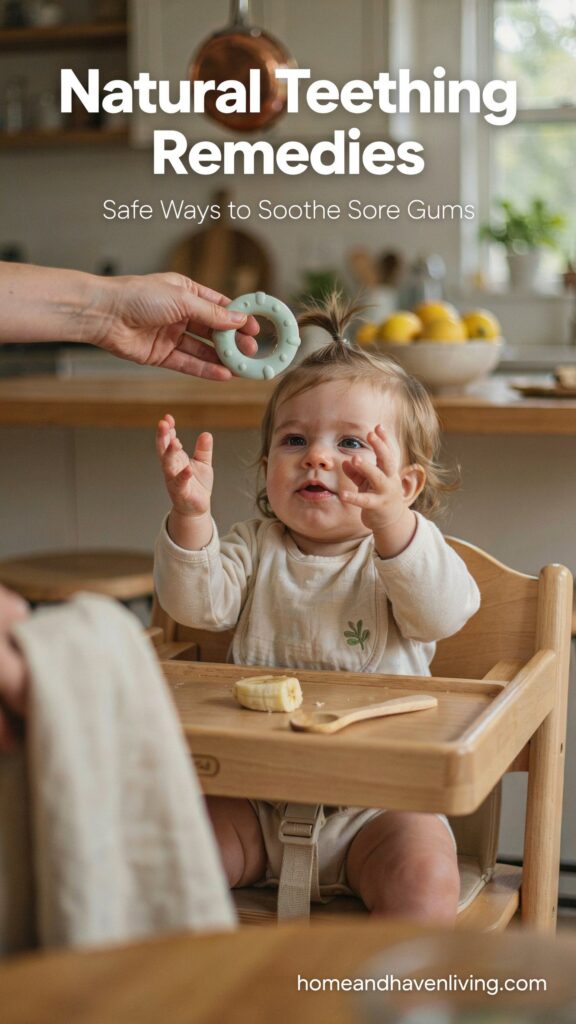
A clean, damp washcloth chilled in the fridge (not freezer, which can make it too hard) gives your toddler something safe to gnaw on. The cold helps numb sore gums naturally.
2. Chilled Teething Rings
Silicone teething rings chilled in the fridge work similarly to a cold washcloth, with a shape designed specifically for little hands and gums.
3. Gum Massage
Using a clean finger, gently rub your toddler’s gums in small circular motions. This mimics the pressure relief that chewing provides and can be especially soothing before bed.
4. Cold Foods (for toddlers already eating solids)
Chilled (not frozen) items like a peeled cucumber spear, a frozen banana in a mesh feeder, or chilled applesauce can offer both distraction and relief. Always supervise closely for choking risk.
5. Extra Cuddles and Comfort
It sounds simple, but increased comfort, rocking, and closeness genuinely helps toddlers cope with the discomfort of teething — sometimes the most “natural remedy” is just more of you.
6. Chamomile (in moderation, for toddlers past 12 months)
A small amount of well-steeped, cooled chamomile tea offered in a sippy cup (for toddlers already established on solid foods and drinks) has a long traditional use for calming fussiness. Always check with your pediatrician before introducing new herbal preparations.
Natural Remedies vs. Common Over-the-Counter Options
| Natural Remedies | Benzocaine Gels (e.g., Orajel-type products) | Amber Teething Necklaces | |
|---|---|---|---|
| Cost | Low — items you likely already have | Moderate | Moderate to high |
| Safety profile | Generally very safe with supervision | FDA has warned against use in children under 2 due to risk of a rare but serious blood condition (methemoglobinemia) | Not recommended by the AAP due to choking and strangulation risk |
| Effectiveness | Effective for mild-to-moderate discomfort | Numbing effect, but safety concerns outweigh benefit for young children | No proven efficacy; risk without established benefit |
| Ease of use | Very easy, no special purchase needed | Easy, but requires careful dosing | Requires constant supervision, never worn while sleeping or unsupervised |
DIY Recipe: Frozen Fruit Teething Pops
A simple, safe recipe for toddlers already eating solid foods (typically 6 months+, but always check with your pediatrician for your child’s specific readiness).
Ingredients:
- 1/2 cup plain whole-milk yogurt (or a dairy-free alternative)
- 1/2 ripe banana
- 1/4 cup soft fruit (strawberries or mango work well)
Instructions:
- Blend all ingredients until smooth
- Pour into a silicone teething pop mold or mesh feeder
- Freeze for at least 4 hours
- Always supervise closely while your toddler uses it, and discard if any cracking or breakage occurs
Safety note: Only use mesh feeders or purpose-made teething pop molds — never give a toddler a loose frozen chunk of food, which is a choking hazard.
What to Avoid
- Amber teething necklaces — a genuine strangulation and choking hazard; not recommended by the American Academy of Pediatrics
- Benzocaine-containing gels — carry an FDA warning against use in children under 2
- Honey in any form — never safe for children under 12 months due to infant botulism risk; even for toddlers over 1, it’s not a recommended teething remedy specifically
- Frozen (rock-hard) teething rings or washcloths — can be too hard and potentially injure gums; chilled, not frozen solid, is the safer choice
- Alcohol-based rubs on gums — not appropriate for children and offer no established teething benefit

FAQ
How long does teething discomfort typically last? Individual teeth typically cause noticeable discomfort for a few days around the time they emerge, though the overall teething process (20 primary teeth) spans roughly 2 years.
Is it normal for my toddler to have a low fever while teething? A very mild temperature increase can sometimes accompany teething, but a true fever (typically 100.4°F/38°C or higher) is generally not caused by teething alone and is worth mentioning to your pediatrician.
When should I call the pediatrician about teething symptoms? If your toddler has a high fever, persistent diarrhea, vomiting, a rash, or seems unusually unwell, these aren’t typical teething symptoms and are worth a call to your pediatrician rather than assuming they’re teething-related.
Are teething biscuits safe? For toddlers who are developmentally ready for solid finger foods and are supervised closely, teething biscuits can be an option — check ingredients for added sugar and always supervise for choking risk, especially as pieces soften and break off.
Is it safe to rub whiskey or alcohol on my toddler’s gums? No — this old folk remedy is not recommended. Alcohol is not safe for toddlers even in small topical amounts on gums, where it can be absorbed.
Can teething cause ear pulling or a runny nose? Some parents report these alongside teething, though the evidence connecting them directly is mixed. If ear pulling is persistent or accompanied by fussing that seems different from typical teething behavior, it’s worth having your pediatrician check for an ear infection, which can look similar.
Final Thoughts
Teething is uncomfortable but temporary, and in most cases, gentle, low-tech remedies — a cold washcloth, a chilled teething ring, a little extra cuddling — are genuinely enough to help your toddler through it safely. Skip the amber necklaces and benzocaine gels, keep an eye out for symptoms that go beyond typical teething, and don’t hesitate to check in with your pediatrician if anything feels off.
This post is for general informational purposes and isn’t a substitute for professional pediatric advice. Always consult your child’s pediatrician with specific questions about teething or any other symptoms.
🛍️ Shop Our Natural Diy Guides
Take a peak at our store here!
You Might Also Like
- DIY Natural Baby Wash — 4 Ingredients
- Natural Baby Care & Low Tox Parenting
- Non Toxic Home Swaps & Cleaning Recipes– for families on a budget