Natural DIY Room Spray (Freshen Your Home Without Toxic Chemicals)
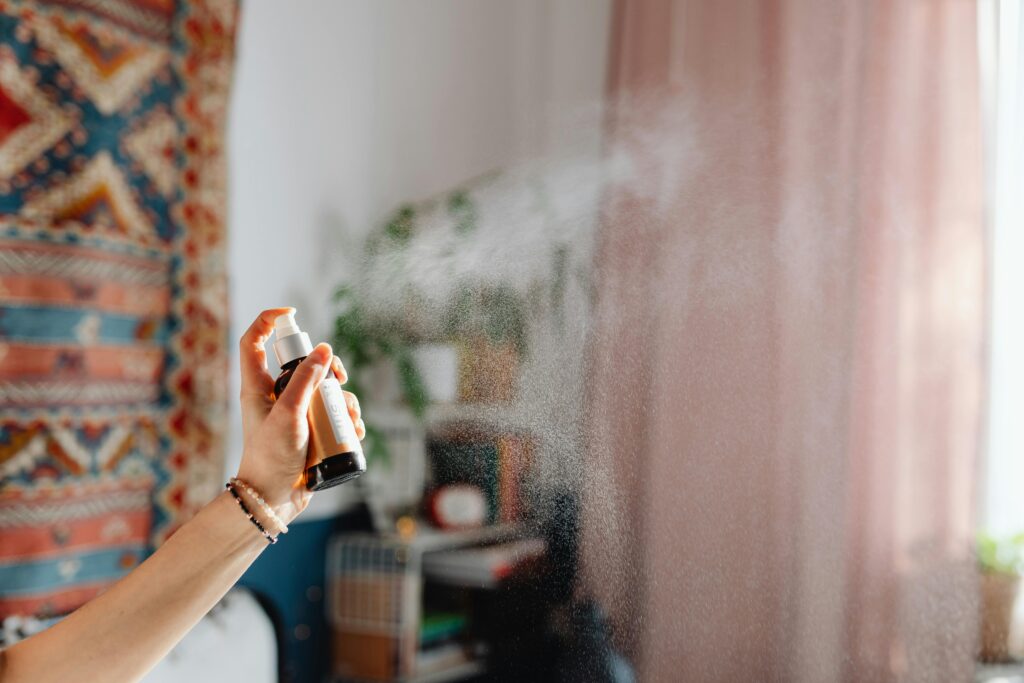
If you’re trying to create a low-tox home, your air freshener is one of the first things worth replacing — and this DIY natural room spray makes it incredibly easy. With just three simple ingredients, you can make a homemade room spray that smells genuinely beautiful, lasts for weeks, and contains nothing you wouldn’t be comfortable spraying around your children, your pets, or yourself.
Store-bought air fresheners are one of the most chemically complex products in the average home — and ironically, one of the least regulated. Let’s break down exactly why that matters, and how simple it is to do better.
What’s Actually in Store-Bought Air Fresheners?
That single word — ‘fragrance’ — on the back of your air freshener is doing a lot of heavy lifting. In most countries, fragrance is considered a trade secret, which means manufacturers are not required to disclose what’s actually inside it. A single ‘fragrance’ ingredient can legally contain dozens of individual chemical compounds — many of which have never been independently tested for long-term safety.
Studies on conventional air fresheners have identified compounds including:
- Phthalates — hormone-disrupting chemicals used to make fragrance last longer, linked to reproductive and developmental concerns
- Volatile organic compounds (VOCs) — including formaldehyde and benzene, which off-gas into your indoor air
- Synthetic musks — some of which accumulate in body tissue over time
- Allergens — artificial fragrance is one of the most common causes of contact dermatitis and respiratory irritation
These compounds don’t just disappear after you spray. They linger in the air, settle on surfaces, and in homes with babies, toddlers, and pets — those surfaces get touched, licked, and breathed in constantly.
This DIY natural room spray replaces all of that with three ingredients you can name, recognise, and trust completely.
Why Switch to a Natural Room Spray?
Many conventional air fresheners release synthetic chemicals into your home environment. These can linger in the air and settle on surfaces.
Switching to a homemade room spray helps you:
• reduce exposure to artificial fragrances
• control what goes into your home
• create a calm, natural environment
• save money on store-bought products
It’s one of the easiest swaps when starting a low-tox living journey.
Check out our free guide to get started on a lox-tox journey yourself.
Ingredients for DIY Room Spray
You only need a few simple ingredients.
Ingredients
• 1 cup water
• 1 tablespoon witch hazel
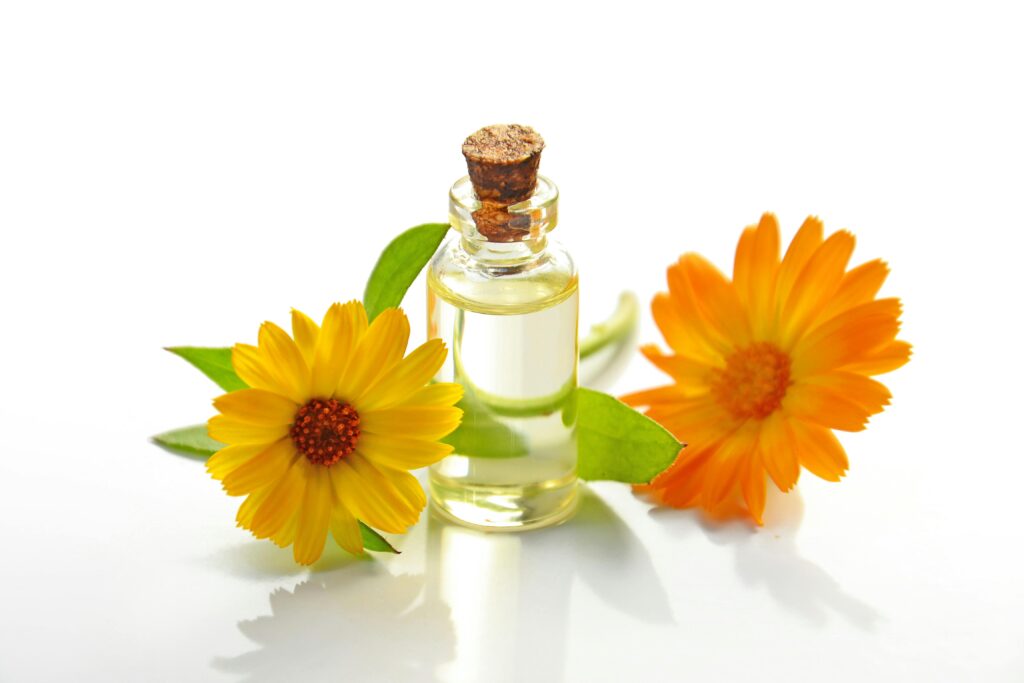
• 10 drops essential oil Ingredients
Why witch hazel? Essential oils and water don’t mix naturally — witch hazel acts as a gentle dispersant that keeps the oils distributed evenly throughout the spray. Without it, the oil floats on top. Vodka or rubbing alcohol can be used as alternatives in the same quantity.
Equipment:
- A 250ml glass spray bottle — glass is strongly preferred as some essential oils can degrade plastic over time
- A small funnel (optional but helpful)
Optional Add-Ins
• Lemon slices (for freshness)
• Lavender buds (for calming scent)
How to Make Your DIY Natural Room Spray — Step by Step
- Pour 1 cup of filtered or distilled water into your glass spray bottle.
- Add 1 tablespoon of witch hazel.
- Add 15–20 drops of your chosen essential oil blend — see combinations below.
- Replace the spray nozzle and shake well to combine.
- Shake before every use — the oils and water will naturally separate between uses.
- Store in a cool, dark place. Use within 4–6 weeks for best scent strength.
6 Essential Oil Blend Recipes — For Every Room and Mood
This is where the fun begins. You can completely customise your natural room spray to suit the room, the season, or the mood. Here are 6 tried-and-tested combinations:
1. Clean and Fresh — For Kitchens and Bathrooms
- 5 drops lemon essential oil
- 5 drops tea tree essential oil
- 5 drops eucalyptus essential oil
This combination smells genuinely clean without being clinical. Tea tree is naturally antibacterial and eucalyptus adds a fresh, airy quality. Perfect for kitchens and bathrooms where you want a clean-smelling space without synthetic chemicals.
2. Calm and Cosy — For Bedrooms
- 8 drops lavender essential oil
- 5 drops cedarwood essential oil
- 3 drops chamomile essential oil
This blend is deeply relaxing and ideal for spraying on pillows and linens before sleep. Lavender is one of the most well-researched natural sleep supports and cedarwood adds a warm, grounding quality that makes your bedroom feel like a sanctuary.
3. Citrus Energy — For Living Areas and Home Offices
- 6 drops wild orange essential oil
- 5 drops grapefruit essential oil
- 4 drops peppermint essential oil
Bright, uplifting, and energising — this is the blend for a slow morning or a mid-afternoon slump. Citrus oils are naturally mood-lifting and peppermint helps sharpen focus.
4. Holiday Home — Festive and Warm
- 6 drops cinnamon essential oil
- 5 drops clove essential oil
- 5 drops orange essential oil
Use a light hand with cinnamon — it’s potent. This blend makes any room smell like a warm, spiced winter home. Wonderful for entertaining or on cold mornings.
5. Floral and Fresh — For Any Room
- 8 drops geranium essential oil
- 6 drops lavender essential oil
- 4 drops bergamot essential oil
A soft, feminine floral blend that’s calming without being overpowering. Bergamot adds a slightly citrusy edge that keeps it feeling fresh and modern rather than old-fashioned.
6. Forest Walk — Grounding and Natural
- 7 drops pine or spruce essential oil
- 5 drops cedarwood essential oil
- 4 drops frankincense essential oil
This blend brings the outdoors in — it smells like a forest after rain and is incredibly grounding. Wonderful for meditation spaces, yoga rooms, or simply when you want your home to feel calm and connected to nature.
Best Essential Oils to Use
Choosing the right essential oils can completely change the feel of your space.
For a Fresh Clean Home
• Lemon
• Tea tree
• Eucalyptus
For a Calm, Relaxing Space
• Lavender
• Chamomile
• Frankincense
For an Energizing Boost
• Orange
• Peppermint
• Grapefruit
You can also mix oils to create your own custom blends.
These are our recommended essential oils.
That’s it. Your natural air freshener is ready.
How to Use Your Natural Room Spray
- Spray 3–5 times into the centre of a room and allow the mist to disperse naturally
- Spray on pillows, bed linen, and curtains — allow to dry before skin contact
- Use in the bathroom as a natural toilet spray — 2–3 spritzes before use
- Spray in your car for a chemical-free freshener — use only 1–2 spritzes in a small space
- Refresh musty wardrobes and linen cupboards with a light spray
- Use as a yoga mat or gym bag spray — tea tree blends work especially well here
How to Use Your Natural Room Spray
Use as a yoga mat or gym bag spray — tea tree blends work especially well here
Spray 3–5 times into the centre of a room and allow the mist to disperse naturally
Spray on pillows, bed linen, and curtains — allow to dry before skin contact
Use in the bathroom as a natural toilet spray — 2–3 spritzes before use
Spray in your car for a chemical-free freshener — use only 1–2 spritzes in a small space
Refresh musty wardrobes and linen cupboards with a light spray
Benefits of DIY Natural Room Spray
1. No Artificial Fragrances
You avoid hidden chemicals often found in conventional sprays.
2. Budget Friendly
This recipe costs far less than buying air fresheners regularly.
3. Customizable Scents
You can create blends that match your mood or home.
4. Supports a Low-Tox Home
A simple step toward reducing your family’s exposure to unnecessary toxins.
Tips for Best Results
- Always shake well before each use — the oils and water separate naturally between uses
- Use a glass spray bottle — essential oils can degrade plastic spray mechanisms over time
- Start with 15 drops and adjust — you can always add more but you can’t take it away
- Store in a cool, dark place — light and heat break down essential oils faster
- Use within 4–6 weeks — water-based sprays don’t have preservatives and won’t last indefinitely
- Label your bottle with the blend name and date made so you know when to refresh it
Tips for Best Results
Label your bottle with the blend name and date made so you know when to refresh it
Always shake well before each use — the oils and water separate naturally between uses
Use a glass spray bottle — essential oils can degrade plastic spray mechanisms over time
Start with 15 drops and adjust — you can always add more but you can’t take it away
Store in a cool, dark place — light and heat break down essential oils faster
Use within 4–6 weeks — water-based sprays don’t have preservatives and won’t last indefinitely
We love these amber glass bottles.
Easy Essential Oil Blend Ideas
Clean & Fresh
• 5 drops lemon
• 3 drops tea tree
• 2 drops eucalyptus
Calm & Cozy
• 6 drops lavender
• 4 drops chamomile
Citrus Energy
• 5 drops orange
• 5 drops grapefruit
These are our recommended essential oils.
Why DIY Matters
One simple swap like this can lead to bigger changes.
Many moms start with something small—like a DIY room spray—and then begin replacing other products too:
• deodorant
• lip balm
• skincare
• cleaning products
Over time, your home becomes simpler, safer, and more intentional.
Frequently Asked Questions
Can I use tap water instead of distilled water?
You can, but distilled or filtered water is preferred. Tap water contains minerals that can cause white residue to build up in your bottle and on surfaces over time. Filtered water from a jug works perfectly well.
How long does homemade room spray last?
The scent stays strong for 4–6 weeks when stored properly. After that the essential oil concentration begins to weaken. The spray itself is safe to use beyond this but the fragrance will be lighter. Make a fresh batch every month for best results.
Can I use fragrance oils instead of essential oils?
This is not recommended for a low-tox spray. Fragrance oils are synthetic and contain many of the same undisclosed compounds found in commercial air fresheners. The whole point of this DIY spray is to use pure, natural essential oils where you know every ingredient.
Can I spray this on fabric?
Yes — spray lightly on pillows, linens, curtains, and upholstery. Always do a small patch test on a hidden area first, particularly on delicate fabrics, as some essential oils can occasionally leave a faint mark if applied too heavily.
What’s the best essential oil brand to use?
Look for 100% pure, therapeutic-grade essential oils. Avoid anything labelled ‘fragrance oil’ or ‘perfume oil’ — these are synthetic. Our recommended oils are linked in the ingredients section above.
One Small Swap That Changes Your Home
Switching from a synthetic air freshener to this DIY natural room spray takes about two minutes to make and costs a fraction of store-bought products. But more importantly, it’s one less source of synthetic chemicals being sprayed into your home’s air every day.
If you’re on a low-tox journey and this is your starting point, well done. Here’s what to try next:
- DIY Natural Makeup Remover — replace your wipes with 2 clean ingredients →
- Simple Low-Tox Swaps for Families on a Budget
- The Easiest Low-Tox Swaps to Start With
- Download the FREE Low-Tox Home Starter Checklist
Save this post to your Pinterest home living board so you always have this recipe on hand. Leave a comment below — which blend are you making first? 🌿
Final Thoughts
Creating a natural DIY room spray is one of the easiest ways to start your low-tox journey.
It’s quick, affordable, and gives you full control over what you’re bringing into your home.
If you’re ready to go further, I created a simple guide with easy DIY recipes and low-tox swaps to help you replace everyday products without overwhelm.
You can check it out here.
As an Amazon Associate, we earn from qualifying purchases, but at no extra cost to you.
Check out our other lox tox swaps.